AI for Meta Ray-Ban Display
About
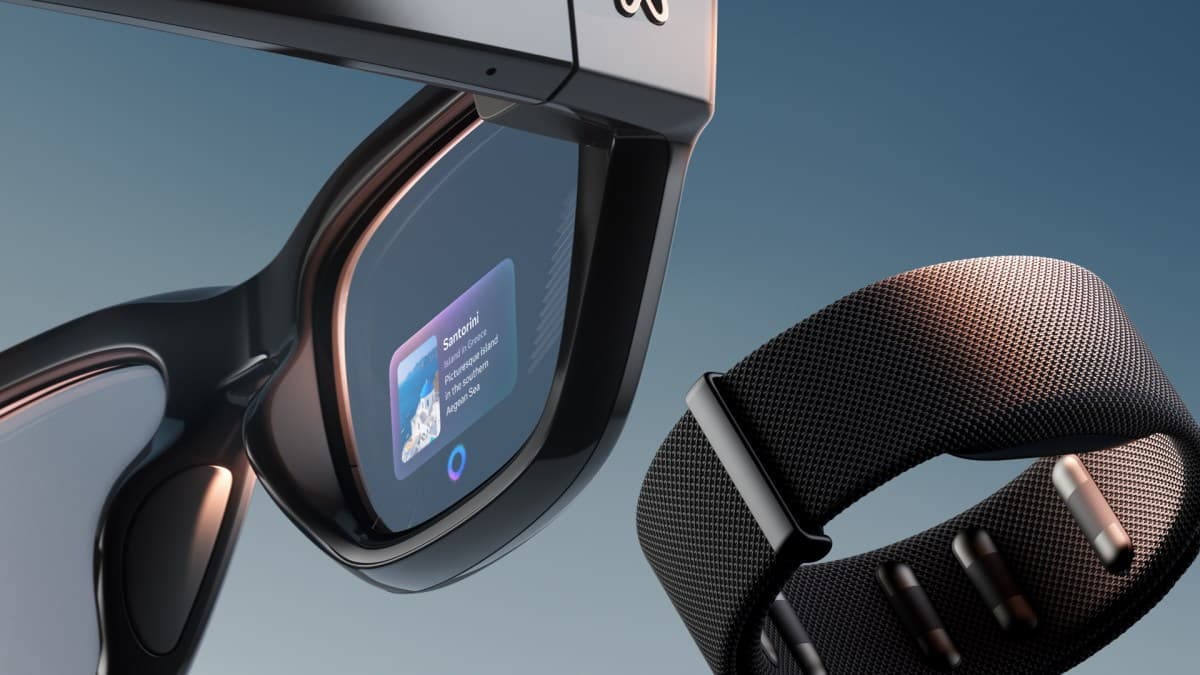
First consumer smart glasses with an integrated display and multimodal AI. Cameras, microphones, speakers, and compute in an all-day wearable form factor.
Role
Design Lead, AI Experiences. Collaborated on the interaction model (invoke, listen, think, respond) and owned the visual response patterns across surfaces, including mobile.
Context
Meta Reality Labs, Consumer AI & Wearables. Shipped September 2025. Key constraints: all-day wearability, additive display (black = transparent), progressive disclosure on a minimal viewport.
Meta Ray-Ban Display is the first pair of smart glasses with a full-color, high-resolution display powered by Meta AI. The display is there when you want it and gone when you don't — designed to keep you tuned in to the world, not distracted from it.
01
The Design Challenge
How does AI show up on your face? A heads-up display isn't a phone. You can't read paragraphs in peripheral vision. Every element has to earn its pixels. We needed an interaction model built for glanceability, not density.
02
Invoke, Listen, Think, Respond
A four-stage lifecycle structures every AI interaction. Invoke is always deliberate (voice or gesture via the Neural Band) so the system never interrupts unprompted. Listen confirms you're being heard. Think communicates processing without inducing anxiety. Respond delivers the answer, optimized for a single glance.
03
Constraints Helping Design Decisions
Three physical constraints shaped every decision. All-day wear required the glasses to be light and socially unobtrusive. Additive rendering means black pixels are transparent, so you see through them. This inverted traditional dark-mode thinking entirely. The small viewport forced progressive disclosure: glance for the headline, attend for detail, hand off to your phone for depth.
04
In-Situ Studies & Testing
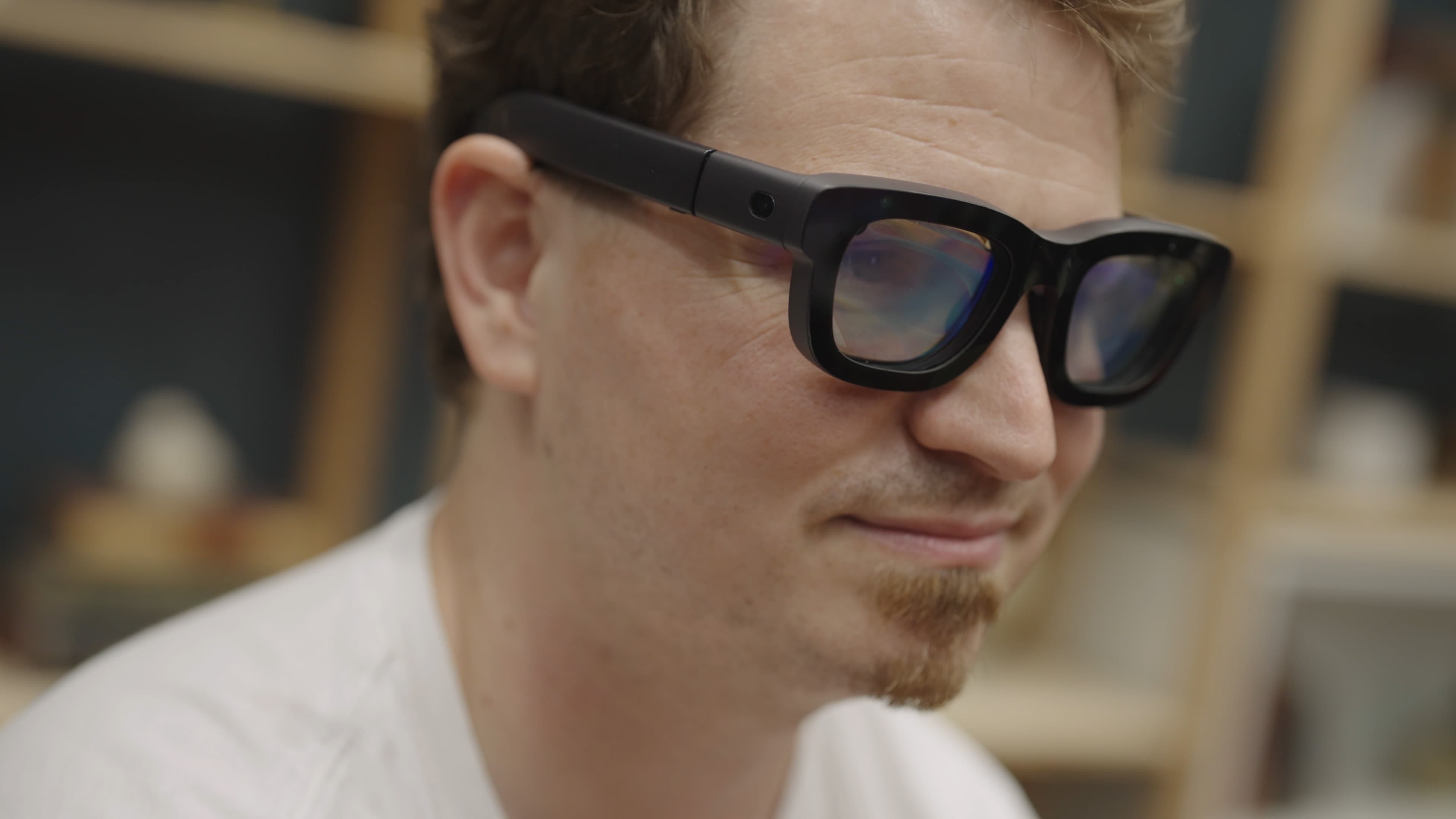
Lab prototypes only tell you so much. We ran in-situ studies with people wearing prototypes in real environments: walking city streets, cooking, navigating transit. Context changes everything. A notification while walking feels different than sitting. Bright sunlight washes out colors. These insights directly shaped contrast ratios, type sizes, and timing curves.
05
Response Cards on the Display
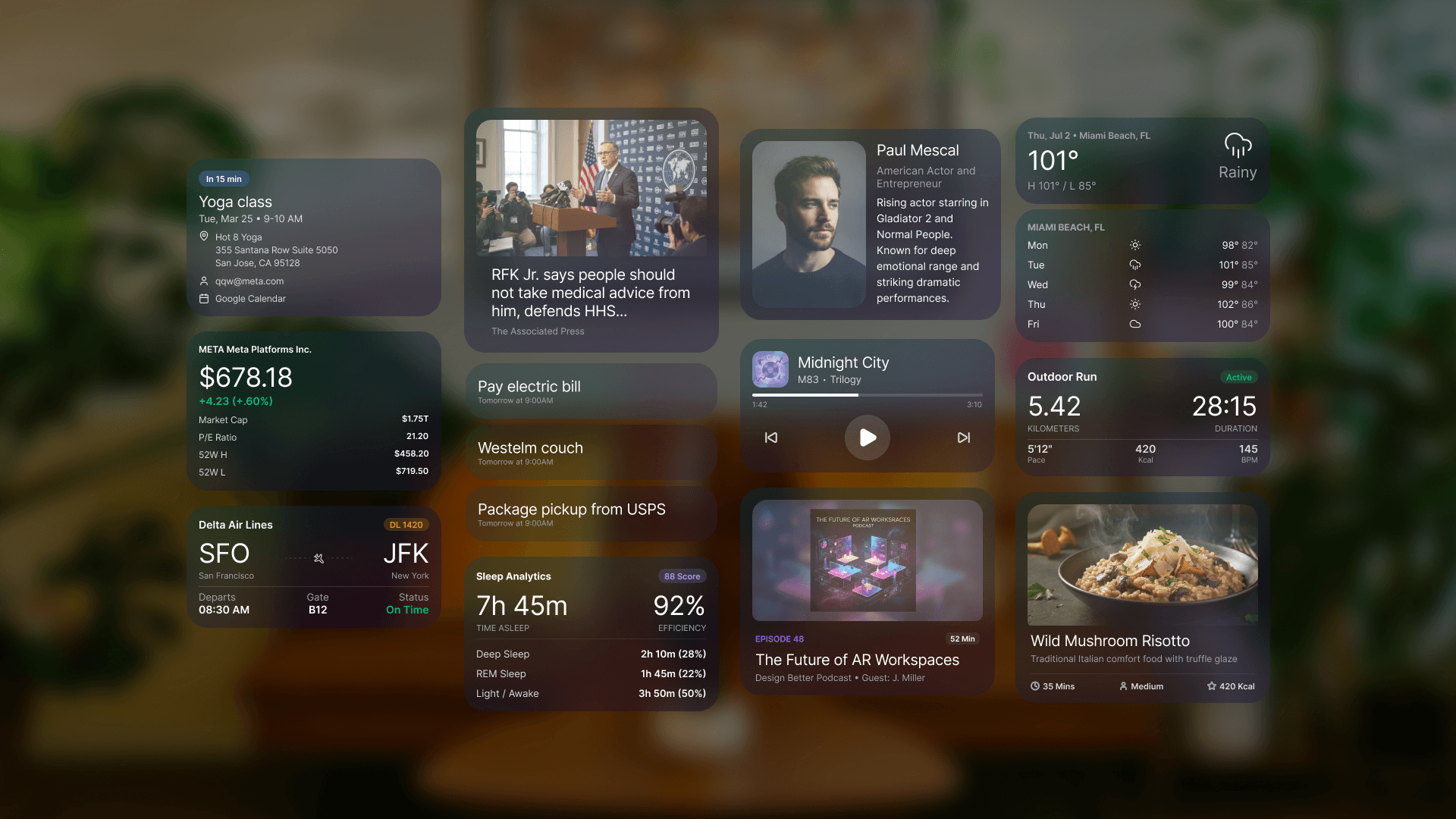
Response cards live inside the glasses, built for the constraints of an additive display where black pixels are transparent. Every card had to read at a glance, with only the most important information rendered so the wearer stayed present in the world. Progressive disclosure surfaced deeper detail only when they lingered.
06
Mobile Variants
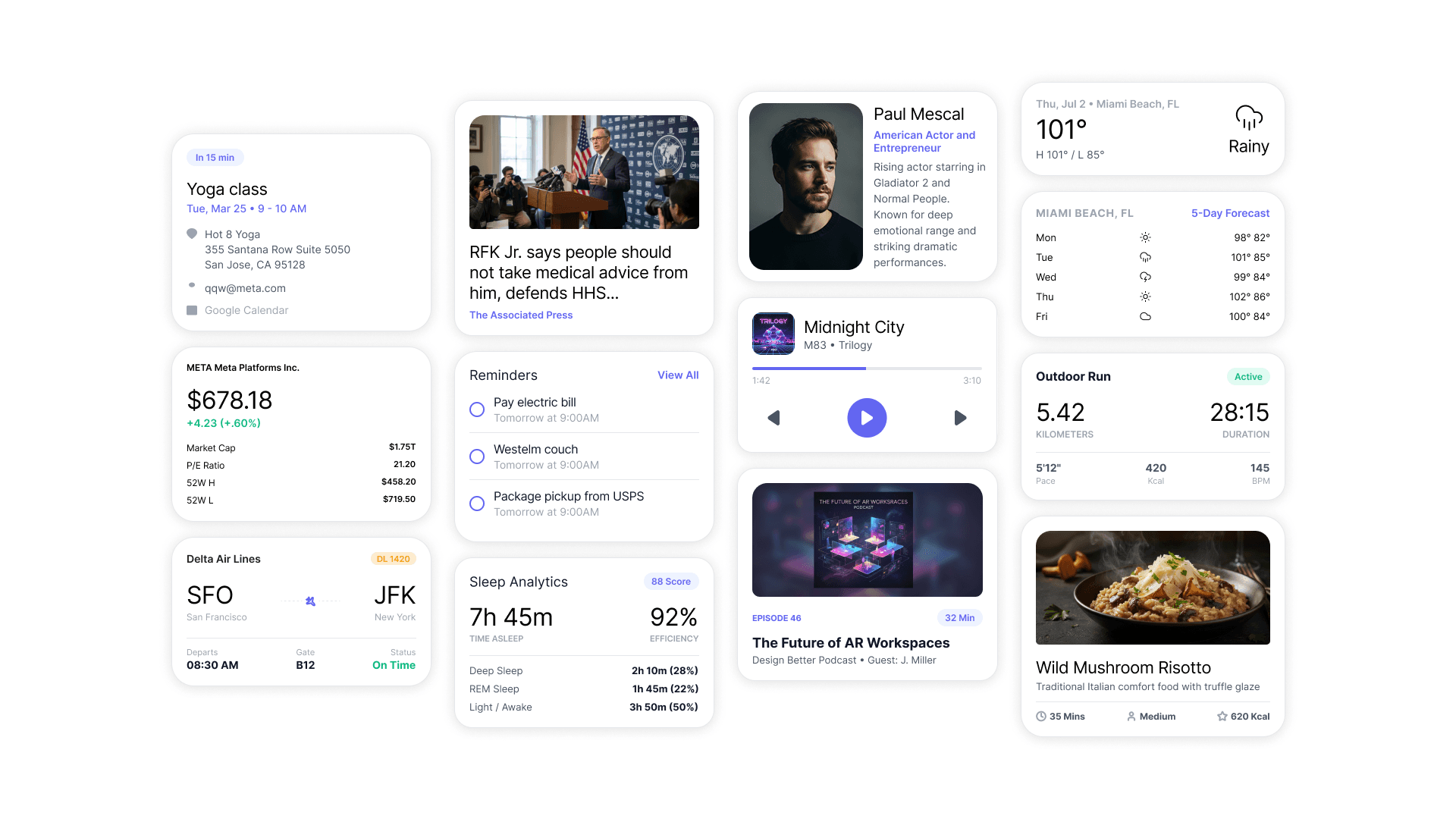
Mobile variants carry the same information into the Meta AI app, rebuilt for a touch surface. Imagery renders in full color, spacing and tap targets follow mobile conventions, and the visual language stays consistent so a response feels like the same product across both surfaces.